
The President of the Iranian Horticultural Science Association at the 14th Iranian Horticultural Science Congress Emphasizes:
The Future of Iranian Horticulture Requires an Interdisciplinary Approach and International Cooperation
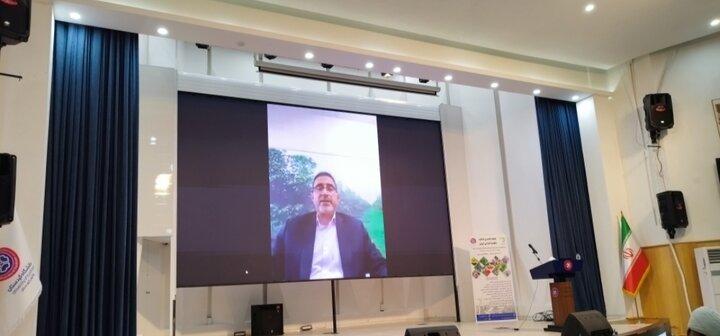



Emphasizing the necessity of a paradigm shift in scientific approaches within the field, the President of the Iranian Horticultural Science Association stated: "The future of Iranian horticulture necessitates an interdisciplinary perspective, scientific networking, international collaboration, and the cultivation of a new generation of creative, problem-oriented researchers."
According to the Public Relations Office of the University of Kurdistan, Kourosh Vahdati, speaking on Monday, June 8, 2026, at the opening ceremony of the 14th Iranian Horticultural Science Congress hosted by the University of Kurdistan, remarked: "The presence of professors, researchers, executive managers, producers, and students from across the nation, alongside the participation of international experts, underscores the vital and strategic position of horticultural sciences in sustainable development, food security, public health, and Iran's agricultural economy."
Referring to the challenges facing the country's agricultural and horticultural sectors, he added: "Climate change, the water crisis, environmental stresses, soil erosion, economic difficulties, resource limitations, declining productivity, and threats arising from regional and global crises are among the most critical issues in this field. In such circumstances, the role of knowledge, technology, innovation, and scientific cooperation becomes more significant than ever."
The President of the Iranian Horticultural Science Association continued: "Food security, public health, and the conservation of natural resources are humanitarian and global concerns. Any damage to the infrastructure related to this sector will have consequences that transcend national borders." He further emphasized: "The Iranian scientific community has consistently demonstrated that even under the most arduous conditions, it will not cease its pursuit of science, education, research, and service to the people."
Stating that the future of the agricultural and horticultural sectors can only be envisioned through a knowledge-based path, innovation, the development of modern technologies, and collaboration between academia, the government, the private sector, and farmers, he noted: "Today, horticultural sciences are no longer limited merely to crop production; rather, they are intertwined with issues such as human health, food security, environmental sustainability, artificial intelligence, water resource management, the green economy, and rural development."
Vahdati concluded: "The future of Iranian horticulture requires an interdisciplinary outlook, scientific networking, international cooperation, and the training of a new generation of creative and problem-solving researchers. With its unique climatic diversity, rich agricultural heritage, and high scientific capacity, Iran has the potential to become a reference country in horticultural sciences within the region and the world. However, achieving this goal requires solidarity, meticulous planning, investment in research, and the strengthening of the link between science and practice."


Quick Links
Electronic Services
Useful Links


University of Kurdistan, Pasdaran Boulevard, Sanandaj, Iran

Postal Code: 6617715175

Phone: +988733664600-8

Email: info@uok.ac.ir


site visit
- today:
- yesterday:
- all:
Last Update
10 Jun 2026 - 05:35:56